

[Activity] Chairman Choi Jai-chul Presents Strategies for Expanding K-Food Exports in the Era of Climate Change
본문
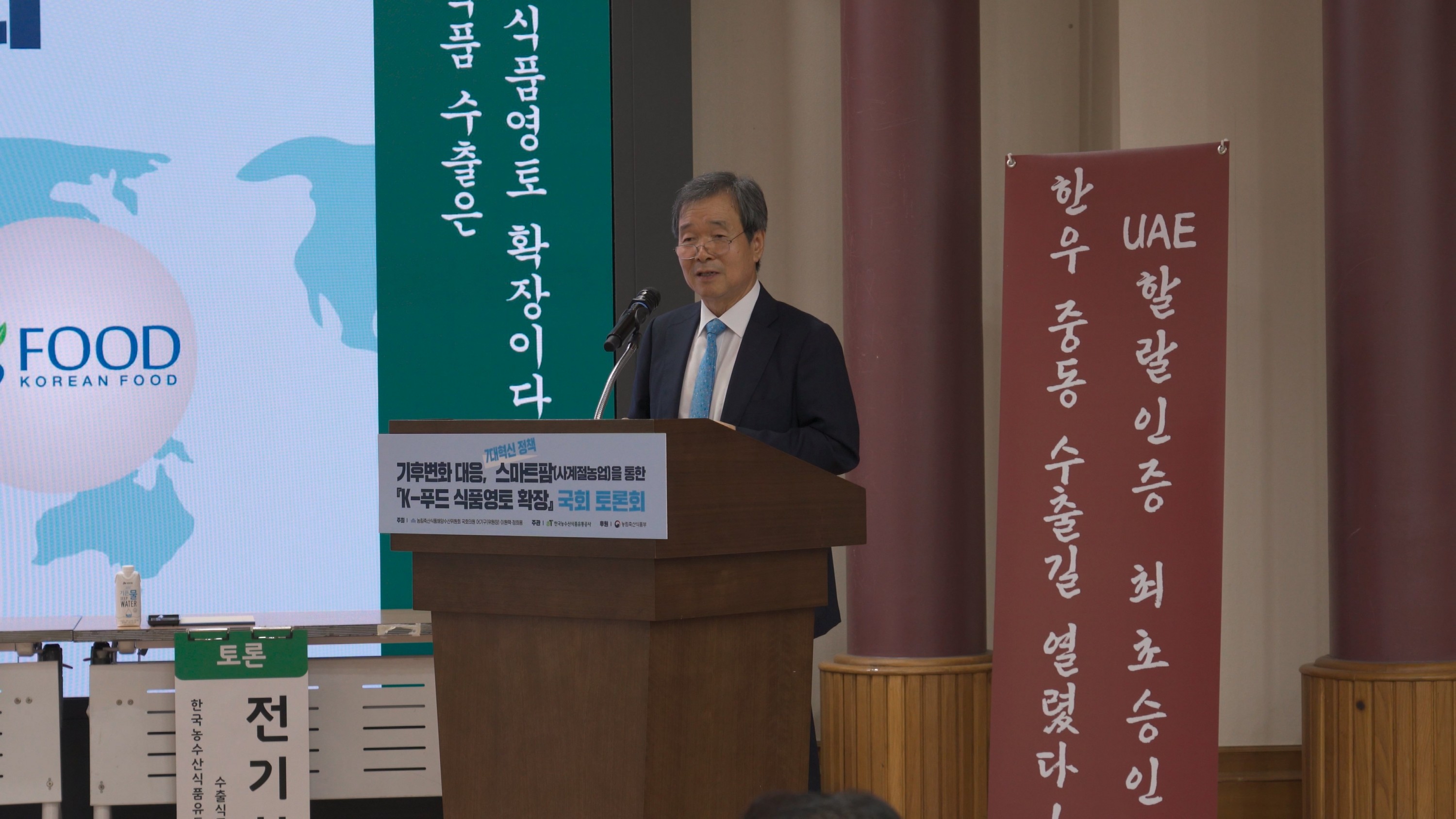
On September 16, Chairman Jai-chul Choi of the Climate Change Center delivered a keynote presentation on “Strategies for Expanding K-Food Exports in Response to Climate Change” at the National Assembly seminar organized by the Korea Agro-Fisheries & Food Trade Corporation (aT, President Hong Moon-pyo).
Chairman Choi emphasized the need for global cooperation as a survival strategy for the food industry in the era of “climateflation.” He explained that the global food supply chain, heavily dependent on raw materials, is already vulnerable to climate change impacts, which could lead to declining corporate profitability, shrinking consumer demand, and slower industry growth. To overcome these risks, he stressed that international collaboration and shared responsibility are essential, urging stakeholders to go beyond individual corporate efforts and actively participate in global partnerships.
He further noted that “climateflation and reduced household income represent systemic, global risks to the future of the food industry,” underscoring the importance of close cooperation among businesses, governments, and the international community to build a sustainable food ecosystem. Chairman Choi cited the example of the Denmark Kimchi and Ramen Festival, highlighting that when diaspora communities, embassies, and companies work together, K-Food can achieve remarkable success. On prospects for the Middle Eastern market, he pointed to the popularity of Korean food at Expo Dubai and welcomed the recent certification of Korean meat exports as a significant breakthrough, projecting future growth in sectors such as instant foods. He added that “localized strategies and premium positioning will be indispensable for K-Food’s continued expansion.”
Chairman Choi also stressed the diplomatic value of K-Food, stating that “food often represents culture and national identity at international events, and when Korean cuisine is featured as a central component, it directly contributes to enhancing Korea’s global standing.” At the same time, he pointed to institutional challenges, noting that the 2016 “Improper Solicitation and Graft Act” has constrained corporate sponsorship opportunities at overseas events, and called for legislative review to address these limitations.
In closing, Chairman Choi stated, “For K-Food to expand its global reach, embassies, diaspora communities, public enterprises, and food companies must join forces. Even in the era of climate change, K-Food remains a future industry with significant potential for growth.”


-
[동정] 최재철 기후변화센터 이사장, 기후변화 대응 K-푸드 수출 확대 방안 제시
목록
-
[탄소시장 동향 브리프(2025년 9월 3주)] 탄소 배출권 공급 2050년까지 약 35배 급증 전망


