

[Field Sketch] Climate Change Leadership Academy 25th Cohort Overseas Study Visit to Shenzhen, China
본문
The 25th cohort of the Climate Change Leadership Academy visited Shenzhen, China, from April 23 to 25 for a two-night, three-day overseas study trip to take a close look at how carbon neutrality and green transition are being implemented in actual urban and industrial settings.
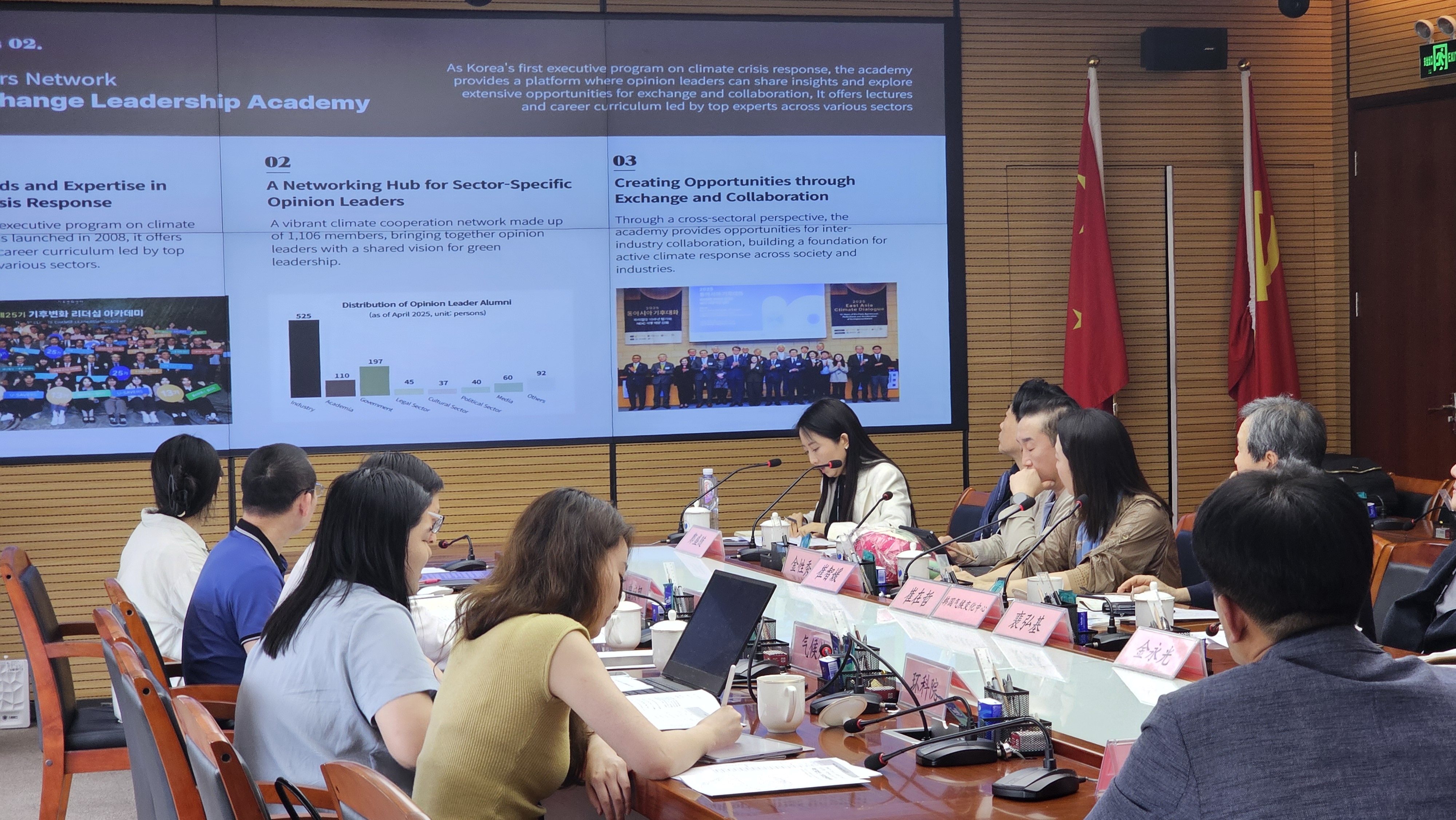
■ Day 1, Urban-Level Climate Transition Strategy – Shenzhen Ecology and Environment Bureau
The first schedule began with a visit to the Shenzhen Ecology and Environment Bureau, which oversees the city’s climate and environmental policies.
There, participants listened to an overview from Shenzhen city officials on the city’s carbon neutrality and green development initiatives, and were able to examine how Shenzhen is transforming into both an “innovation city” and a “green city.”

■ Day 1, Futian Carbon Neutrality Pilot Zone
The Futian Carbon Neutrality Pilot Zone, visited next, was a symbolic site showing how the public sector can lead the energy transition.
Participants toured the solar panel parking lot and public building energy systems around the Futian District Government complex, and confirmed that administrative spaces can serve not only as workplaces but also as platforms for practicing carbon neutrality.
The active use of solar facilities across building facades, rooftops, and parking areas, along with a system that manages electricity use and carbon data in real time, was particularly noteworthy.
The way renewable energy use, energy efficiency, green space expansion, and resource circulation were connected within a single system demonstrated that a “carbon-neutral city” is not an abstract concept, but the result of concrete design and implementation.
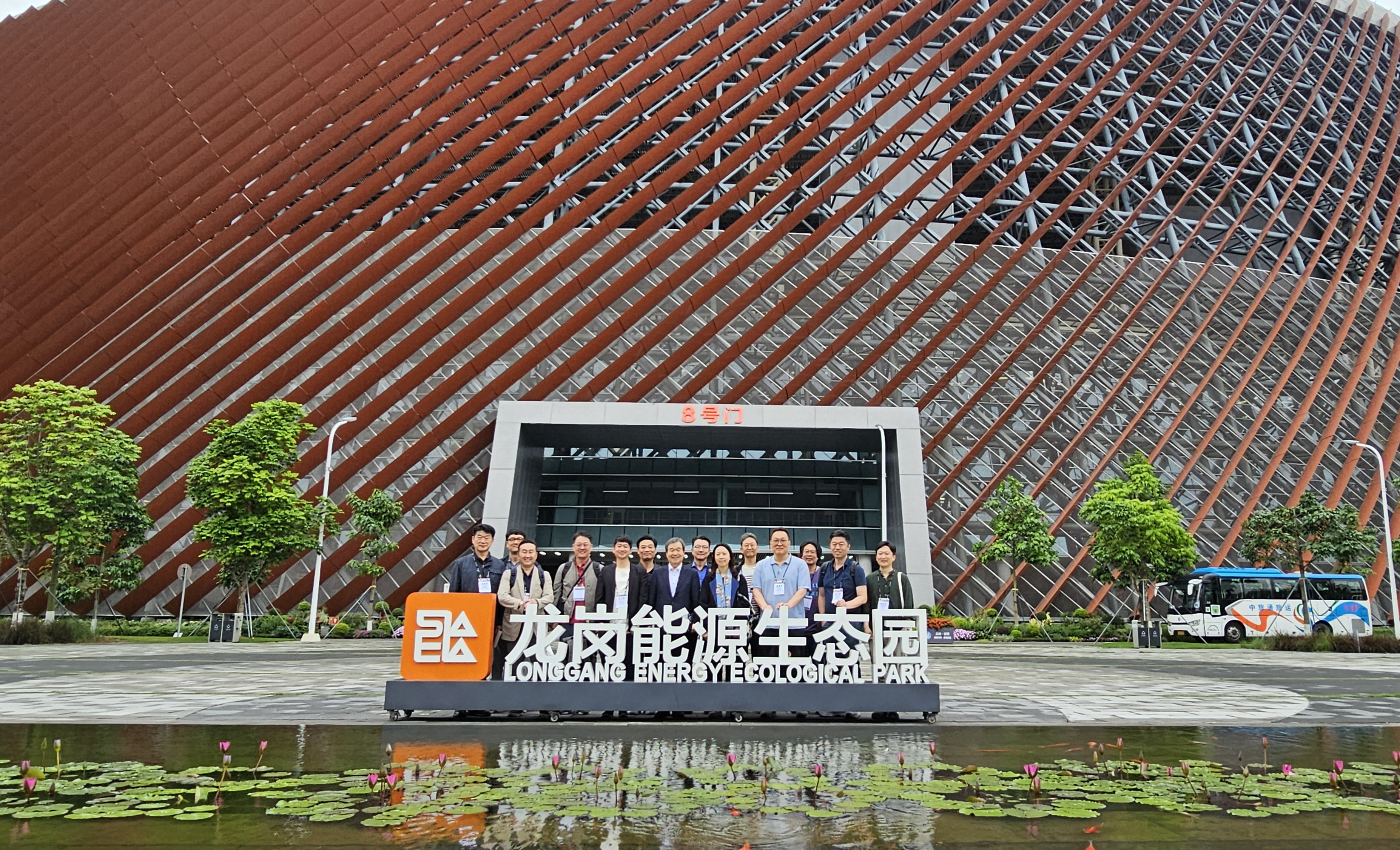
■ Day 2, From Waste Treatment Facility to Ecological Park – Longgang Energy Ecological Park
The Longgang Energy Ecological Park, visited on the second day, is an example of integrated infrastructure combining municipal waste treatment, energy production, eco-friendly architecture, and citizen-friendly space.
As a case of redesigning a conventional waste treatment facility into eco-friendly urban infrastructure, participants reviewed the entire process from waste intake and storage to incineration, power generation, and exhaust gas treatment, confirming the structure of resource circulation and energy production.
Longgang Energy Ecological Park was introduced as an infrastructure model that goes beyond waste treatment to incorporate resource circulation, energy production, and urban landscape improvement.

■ Day 2, Site of Industrial Transition – BYD History Museum
At the BYD History Museum, participants were able to trace the company’s growth from its early battery production processes to its current electric vehicle and energy technologies. Participants examined how environmentally friendly industries have connected technological development with market expansion through BYD’s core technologies, including Blade Battery, CTB (Cell-to-Body) technology, hybrid systems, and semiconductor technology.
This overseas study visit to Shenzhen, China, provided an opportunity to examine how climate policy, public infrastructure, and eco-friendly industrial technologies are interconnected within a city.
In addition, Shenzhen’s case served as an opportunity to confirm that carbon neutrality can be realized concretely in spaces, systems, industries, and daily life, going beyond declarations and targets.


-
메탄 관리 체계 전환 가시화…산업계 적용 방향 논의
목록
-
[Latest Updates] Opening Ceremony of the 25th Climate Change Leadership Academy “From Declaration to Implementation"


