

[On-Site RE:VIEW] Korea’s 12th Electricity Plan: Progress and Remaining Challenges
본문
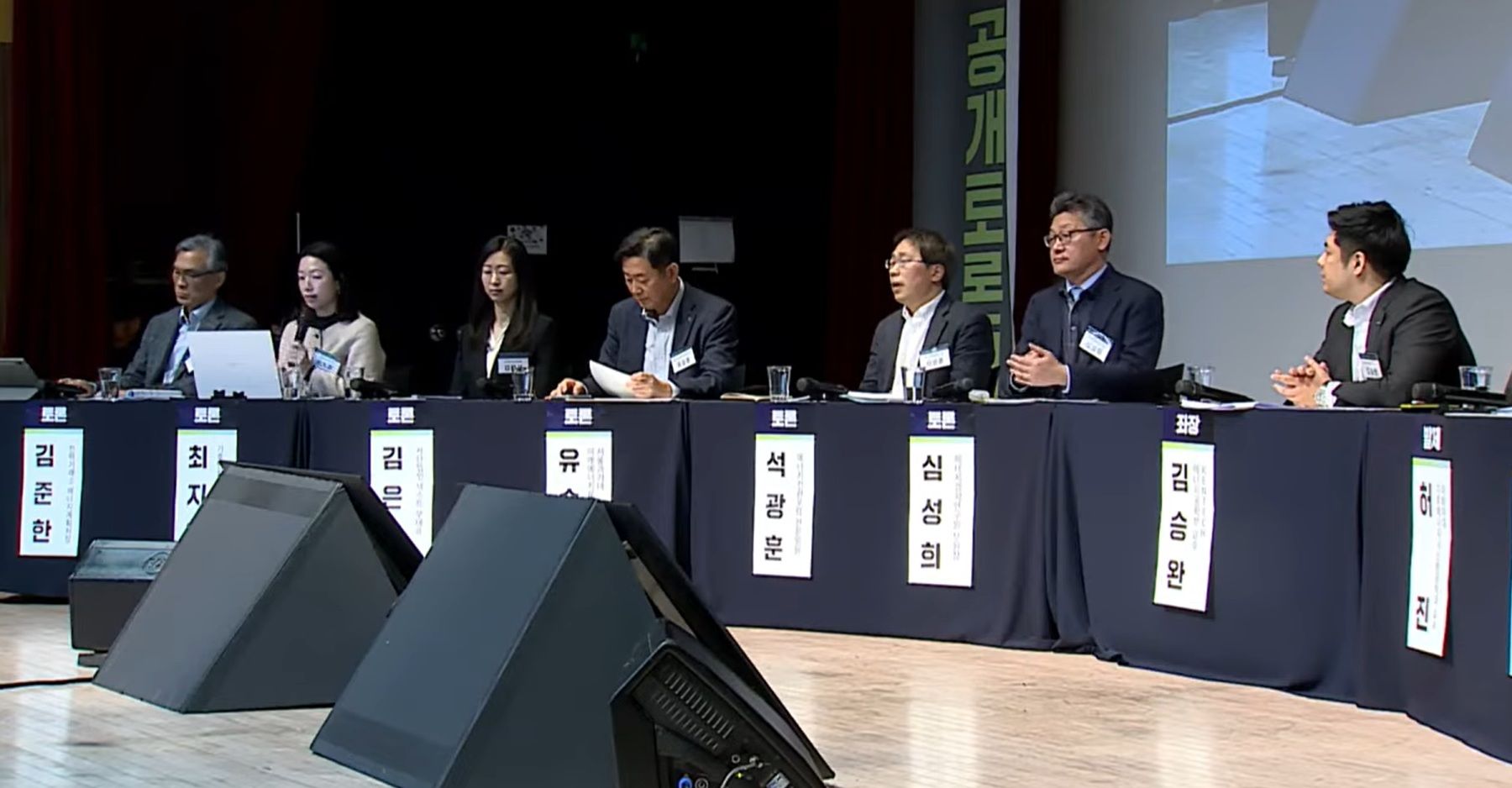
Last month, South Korea held a public discussion on the electricity demand outlook for the 12th Basic Plan for Long-term Electricity Supply and Demand (BPLE), a roadmap that will shape the country's energy direction for the next 15 years. The Climate Change Center participated and shared its views on the draft demand outlook.
The BPLE is Korea's national energy planning framework that forecasts future electricity demand and determines how power will be supplied and managed. It covers new power plants, transmission networks, the energy mix, and demand-side management, while also affecting industrial competitiveness, carbon neutrality, and energy security. As decarbonization and industrial transformation accelerate, the scope and complexity of the BPLE continue to expand.
The 12th BPLE includes several meaningful improvements: the introduction of baseline and upside demand scenarios, 8,760-hour load pattern analysis, and server-based forecasting model for data center demand. Holding a public discussion at an early stage of the planning process was also a positive step.
At the same time, key challenges remain. The current scenarios focus mainly on demand growth, with limited attention to downside risks such as efficiency gains, distributed energy expansion, or investment delays. Electricity planning must consider not only supply stability but also forecast uncertainty. This means examining downside risks and developing clear plans for which investments to defer and which demand-management measures to prioritize.
The question of who bears the costs also needs to be addressed. Large-scale demand growth brings additional transmission and grid costs, and a broader social discussion is needed on who should bear them. A broader social consensus is needed, with the understanding that a BPLE that fails to reflect the full range of society's needs risks generating unnecessary costs — ultimately passed on to consumers through higher electricity bills or absorbed by the public Electricity is no longer simply about lighting or home appliances. Sectors often described as future industries — including AI, semiconductors, data centers, and electric vehicles — as well as the broader electrification of existing industries, are becoming essential foundations of both the economy and everyday life. In this context, BPLE should be discussed not only in terms of rising electricity demand driven by advanced industries, but also within the broader transition toward economy-wide decarbonization and electrification.
Going forward, the BPLE should evolve beyond a conventional power supply plan into a broader social framework that takes into account climate action, carbon neutrality, cost burdens, industrial competitiveness, and public acceptance.
To achieve this, transparent information sharing and open participation by government, businesses, and citizens will be essential. This public discussion was meaningful in that it marked the beginning of a broader conversation on these issues. The Climate Change Center will continue engaging with experts while expanding communication efforts to encourage greater public interest and participation.


-
[Carbon Market Trends Brief] Carbon Credits emerge as Assets requiring ongoing management even after issuance
목록
-
[정책 현장 RE:VIEW] 제12차 전기본 토론회, 기후변화센터가 본 성과와 과제


